


White Fillings
White fillings are used as an alternative to amalgam fillings, which are aesthetically poor and may contain mercury, which could be toxic.
White Fillings
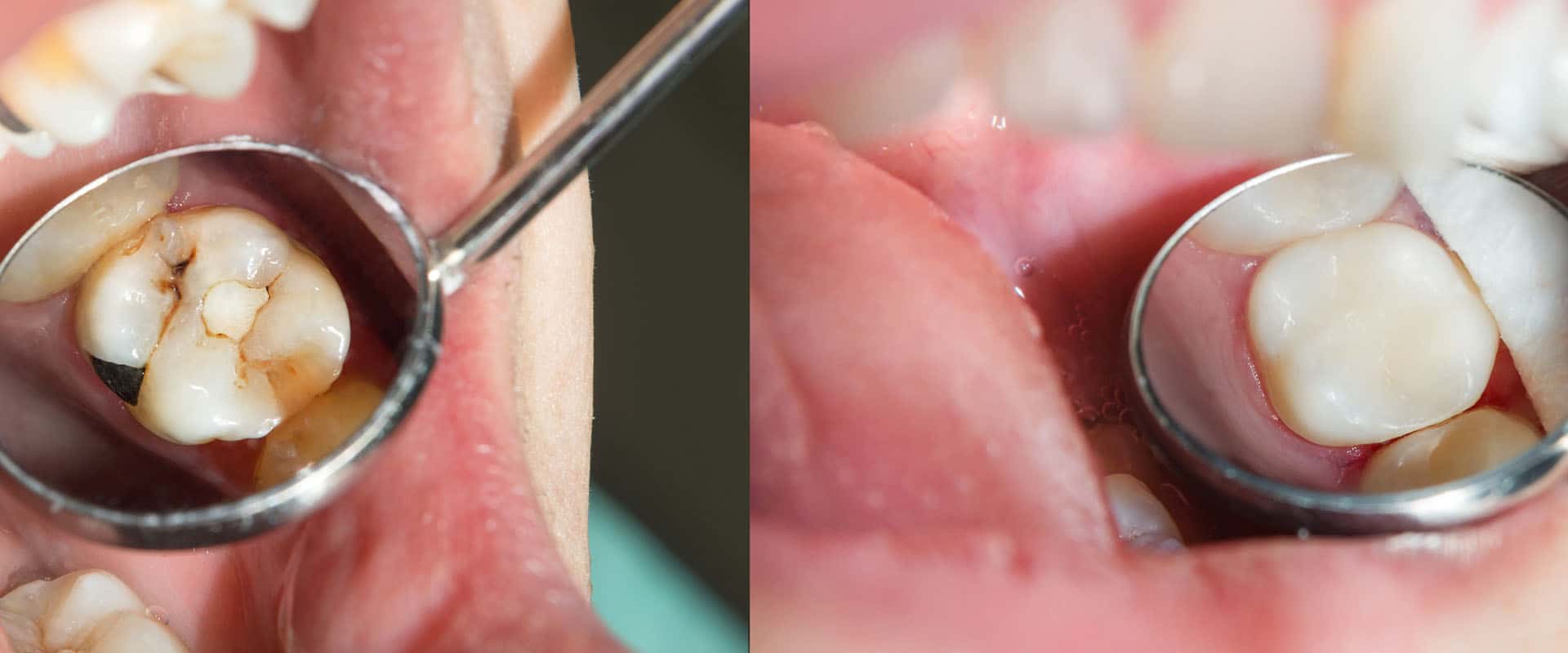
White fillings are made of composite, consisting of resin and an inorganic material such as glass or nano particles, and are mainly used to fill cavities. Combined with enamel and dentin bonding techniques, white fillings restore teeth that have become damaged as a result of tooth decay or injury.
How does it work?
In some cases where a drill may be used, a local anesthetic or sedative is injected into the gum tissue around the tooth to be filled, so your treatment will be pain-free. After removing the decay and existing old fillings if any, the treatment site is cleaned and then dried. To aid bonding, the tooth surface is etched and coated with a gel and bonding solution. Once prepared, the white filling material is placed into the tooth cavity or area to be filled, and then moulded to fit the tooth contours. A curing light is then used to harden the filling material before it is trimmed and polished, to look like a natural part of your tooth.
More information about white fillings
There are two types of white filling – direct and indirect.
Direct fillings
Direct white fillings or dental composites are hardened with a curing light after the white filling material is used to fill the cavity and molded into the tooth’s shape. The direct procedure is used for dental treatments such as gaps, tooth-reshaping, small tooth decays and partial tooth crowns.
Indirect fillings
In the indirect procedure, the white filling material is first made in a lab, usually with ceramic material, before it is placed within the mouth. This method is used more frequently for huge tooth cavities, gaps, reshaping, inlays and onlays, bridges, and partial or full crowns.
What are the risks
Inherent risks exist in all dental procedures, but the main concern with white fillings is their durability and potential shrinkage. However, new technology and dental procedures are resulting in stronger, longer-lasting and low-shrinkage white fillings.
Benefits of white fillings
The benefits far outweigh such problems because white fillings:
- Can restore not only teeth cavities caused by decay, but chipped, broken and worn teeth.
- Composite colour can be harmonised to your normal tooth colour to appear natural, so it isn’t noticeable when you smile.
- May be used as a veneer over stained or discoloured teeth.
- Preparation and treatment require less time.
- Can be combined with other dental treatments, such as inlays, crowns, and bridges.
- Is not considered toxic or a danger to health.